


We will cover what they are and how they work, key features, common uses, frequency and chip options, the benefits over other wristband types, customization, and how to choose.
Key takeaways
- Silicone RFID wristbands seal an RFID or NFC chip inside a comfortable, durable band.
- They are waterproof and reusable, making them ideal for multi-day and recurring use.
- Common uses include event entry, cashless payment, access control, and membership.
- Frequency and chip choice should match the system the wristband will work with.
What silicone RFID wristbands are
At their core, silicone RFID wristbands combine two things: a band made of soft, flexible silicone and an embedded RFID or NFC inlay — a microchip connected to a small antenna. The inlay is sealed inside the silicone during manufacture, protecting it from water, dust, and impact while keeping the band comfortable to wear. Each chip carries a unique identifier (and can hold a small amount of data), so when the wristband is presented to a compatible reader, the system recognizes the wearer and grants access, processes a payment, or records the interaction. The silicone body makes the credential wearable and durable, while the chip makes it smart. The result is a single, low-friction item that a guest, member, or employee wears on the wrist and simply taps or scans, replacing cards, tickets, or cash with a contactless band that is hard to lose and easy to use throughout an event or membership period.
How the embedded chip works
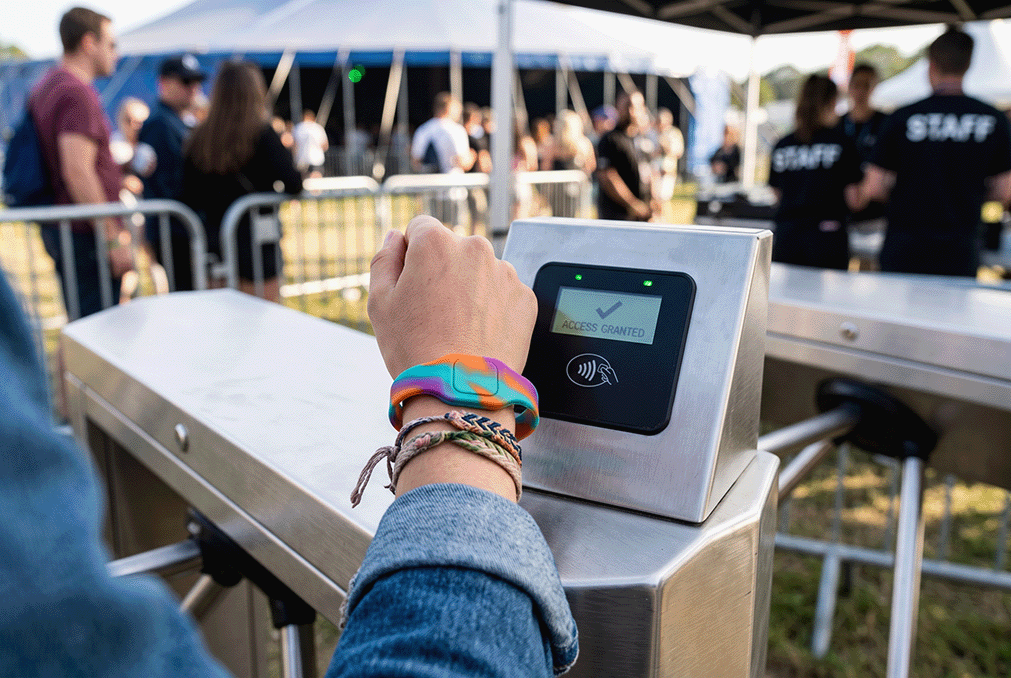
The technology inside is the same passive RFID/NFC used across the industry. The chip has no battery; it draws power from the radio field emitted by the reader, then transmits its identifier back. When a wristband comes within range of a reader — a few centimeters for NFC and high-frequency bands, or farther for UHF — the reader energizes the chip, reads its ID, and passes that to the back-end system, which decides what happens next. For access control, the ID is checked against a list of authorized credentials; for cashless payment, it is linked to a prepaid balance or account; for membership, it identifies the member and pulls up their profile. Because the interaction is contactless and near-instant, throughput is high — important at busy gates or points of sale. The wearer does nothing but hold their wrist near the reader, making the experience fast and intuitive even for first-time users.
Key features that make them useful
Several features explain the popularity of silicone RFID wristbands. They are waterproof, since the chip is fully sealed in silicone, so they survive swimming, rain, hand-washing, and sweat — essential for water parks, pools, and active use. They are durable and flexible, resisting the bending, stretching, and impact of daily wear without damaging the chip. They are comfortable, made from skin-friendly silicone that can be worn for days. Most are reusable, designed to be collected, re-encoded, and used again across events or seasons, lowering cost per use. Many use adjustable or interchangeable closures to fit different wrist sizes. And they come in a wide range of colors and can be printed or molded with logos and text. Together, these features make silicone bands a practical, comfortable, and long-lasting credential suited to demanding, high-volume, and water-exposed environments where paper or fabric bands would not hold up.
Common uses and applications
Silicone RFID wristbands appear across many settings. At events and festivals, they serve as tickets, access passes for different zones, and cashless payment bands, speeding entry and reducing cash handling. At gyms and fitness clubs, they control access to facilities, lockers, and classes while identifying members. At water parks and pools, their waterproofing makes them the natural choice for entry, lockers, and cashless spending. In access control, they act as a wearable alternative to cards for employees or residents. In healthcare and care settings, they can identify patients or residents. At resorts and on cruise ships, a single band can handle room access, payments, and activities. The common thread is a need for a durable, contactless credential that is comfortable to wear for extended periods and convenient to tap — making silicone bands a versatile fit wherever people need quick, reliable identification or payment on the move.
Frequency and chip options
Like all RFID, silicone wristbands come in different frequencies, and the right one depends on your system. Low-frequency (125 kHz) chips suit simple, short-range access control. High-frequency (13.56 MHz) chips, including NFC types like NTAG and MIFARE families, are the most common for events, payment, and access because they are widely supported, work with smartphones (for NFC), and offer security features. Ultra-high-frequency (UHF) chips provide longer read range, useful where bands must be read at a distance or in bulk. The chip choice within a frequency matters too — different chips offer different memory, security, and compatibility. The key principle is that the wristband must match the readers and software it will work with; a band is only useful if your system can read it. Choosing frequency and chip to fit your existing or planned infrastructure ensures the wristbands integrate smoothly rather than requiring you to change your readers or platform.
Benefits over other wristband types
Compared with paper, Tyvek, or fabric RFID wristbands, silicone bands stand out for durability and reuse. Paper and Tyvek bands are inexpensive and ideal for single-use, high-volume events, but they are not designed to last or be reused. Fabric bands offer a premium look and multi-day comfort but are typically single-use too. Silicone bands, by contrast, are built to be worn repeatedly and reused across events or seasons, making them economical where the same credential is needed long-term — gyms, resorts, recurring events, and access programs. Their waterproofing also exceeds other materials, making them the clear choice for water exposure. The trade-off is a higher unit cost than disposable bands, which is why silicone suits reusable and durable applications while paper or Tyvek suit one-time, high-volume use. Choosing between them comes down to whether you need a long-lasting, reusable credential or a low-cost disposable one for a single event.
Customization and branding
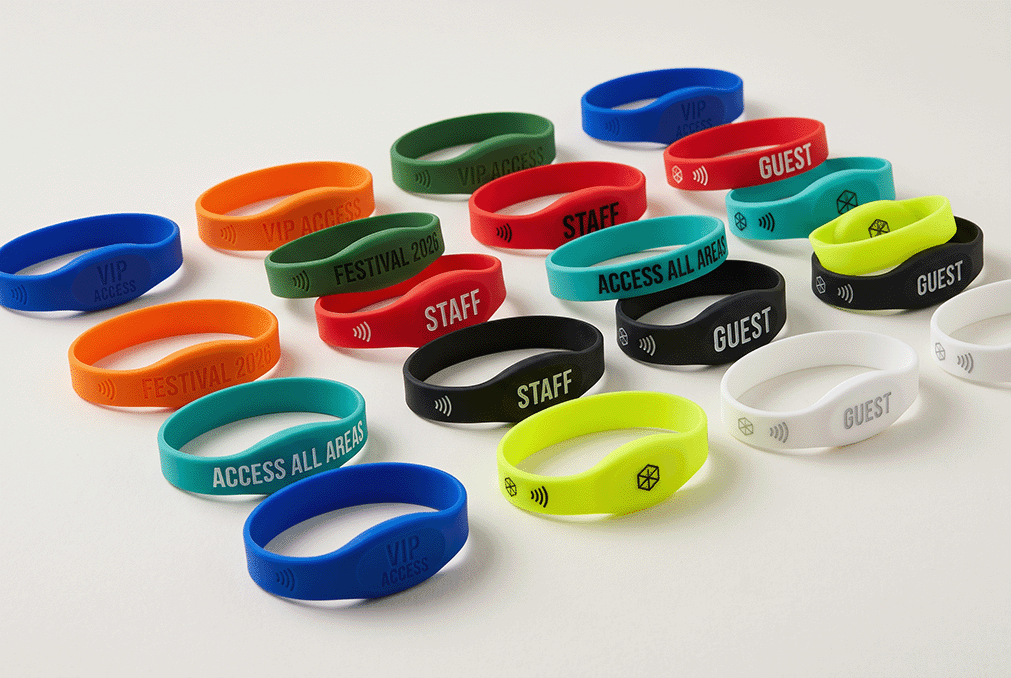
Silicone wristbands are highly customizable, which adds value beyond function. They can be molded in virtually any color, including brand colors matched to a specification, and produced in different widths and styles. Logos, event names, and text can be debossed, embossed, or printed onto the band, turning it into a branded item that promotes the event or organization while it is worn. Closures can be selected for the use case — adjustable for reuse and fit, or one-time locking for security at ticketed events. Different chip placements and band designs accommodate various needs. This customization means a silicone RFID wristband can be both a functional credential and a marketing or keepsake item, carrying branding throughout an event and afterward. For organizations that value brand presence, the ability to customize color, printing, and style makes silicone bands an attractive choice that combines practical access or payment functionality with visible, wearable branding.
How to choose the right silicone wristband
Choosing the right silicone RFID wristband comes down to a few decisions. First, match the frequency and chip to your system — this is non-negotiable, as the band must work with your readers and software. Second, decide whether you need reusable or one-time-locking closures based on whether bands will be reused or are for a single ticketed event. Third, consider the environment — water exposure, duration of wear, and durability needs all favor silicone and inform the closure and construction. Fourth, plan customization — colors, printing, and branding to suit your goals. Finally, consider quantity and budget, since silicone suits reusable and durable applications where its higher unit cost is offset by reuse. Working through these decisions ensures the wristbands fit your application. As a manufacturer of RFID wristbands including a full range of silicone bands, our team can help you specify the right option. To discuss silicone RFID wristbands for your project, contact our team.
Frequently Asked Questions
What are silicone RFID wristbands used for?
They serve as wearable contactless credentials for event entry and cashless payment, gym and facility access, water-park and pool admission, employee or resident access control, membership identification, and resort or cruise programs where one band handles room access, payments, and activities. Their durability and waterproofing make them ideal for extended wear and water exposure.
Are silicone RFID wristbands waterproof?
Yes. The RFID or NFC chip is fully sealed inside the silicone during manufacture, so the bands withstand swimming, rain, sweat, and hand-washing without damage. This waterproofing makes them the natural choice for water parks, pools, and any active or wet environment where paper or fabric bands would fail.
Can silicone RFID wristbands be reused?
Most are designed to be reused. After an event or membership period, bands can be collected, re-encoded with new data, and used again, lowering the cost per use. This reusability makes silicone bands economical for gyms, resorts, recurring events, and access programs where the same type of credential is needed repeatedly over time.
Which chip or frequency should I choose?
Match it to your system. Low-frequency (125 kHz) suits simple access; high-frequency 13.56 MHz NFC chips like NTAG and MIFARE are most common for events, payment, and access and work with smartphones; UHF offers longer range. The band must be readable by your existing or planned readers and software, so chip choice follows your infrastructure.
Can I customize the color and add a logo?
Yes. Silicone wristbands can be molded in custom colors, including matched brand colors, and debossed, embossed, or printed with logos, event names, and text. Closures can be adjustable for reuse or one-time-locking for security. This lets the band double as a branded, wearable promotional item alongside its access or payment function.
Find the right silicone RFID wristband for your venue
We manufacture silicone RFID and NFC wristbands in custom colors, chips, and closures — durable, waterproof, and built for events, venues, and access control.
Talk to our wristband team Explore RFID wristbands