


We will cover the paradox, why testing matters, the tests — tamper-trigger reliability, normal-use survival, adhesion — reading after stress, and getting proven tags.
Key takeaways
- Tamper-evident tags must survive normal use yet trigger reliably on tampering.
- Testing must verify tampering triggers as intended when it should.
- Testing must verify the tag does not falsely trigger in normal handling.
- Confirm the intact tag reads and a tampered tag shows the change.
The tamper-evident paradox
The paradox at the heart of tamper-evident tags shapes their durability requirements. A tamper-evident tag must be durable enough to survive its normal life — application, handling, transport, and the environment — without breaking or triggering, so it functions normally when not tampered with. Yet it must be fragile or reactive enough that tampering (attempted removal, opening, or interference) reliably breaks or triggers it, revealing the tampering. These pull in opposite directions: too durable and it may not trigger reliably on tampering; too fragile and it may break or falsely trigger in normal use. A good tamper-evident tag balances this — surviving legitimate use while reliably failing on tampering — and durability testing must verify both sides of this balance. Understanding that tamper-evident tags embody a paradox — durable enough for normal use yet fragile/reactive enough to trigger on tampering — frames the testing, since verifying both that the tag survives legitimate use and that it triggers reliably on tampering is what confirms the balance works, which is the essence of a functional tamper-evident tag.
Why durability testing matters for tamper-evident tags
Durability testing matters for tamper-evident tags because both failure modes undermine their purpose. If the tag does not reliably trigger on tampering — because it is too durable or the tamper mechanism is unreliable — then tampering goes undetected, defeating the security and authentication the tag provides, which can allow undetected intrusion, counterfeiting, or transfer. If the tag falsely triggers or breaks during normal use — because it is too fragile or poorly made — then legitimate items appear tampered, causing false alarms, rejected goods, and lost trust in the system. Both failures are costly and undermine the tamper-evident function. Testing verifies the tag triggers reliably on tampering and survives normal use without false triggering, ensuring it does its security job without disrupting legitimate use. Understanding that tamper-evident tag failures — not triggering on tampering, or falsely triggering in normal use — both undermine the security function and are costly, and that testing verifies both, explains why durability testing matters, motivating tests that confirm the tag reliably reveals tampering while surviving legitimate use.
Testing tamper-trigger reliability
Tamper-trigger testing verifies the tag reliably reveals tampering when it should. Test the tamper mechanism by performing the tampering it must detect — attempting to remove, peel, open, or interfere with the tag as a tamperer would — and confirming that the tag reliably triggers: the frangible tag breaks or destroys, the antenna severs, or the detectable change occurs, so the tampering is evidenced (visibly and/or electronically, per the tag's design). Test this consistently across samples and tampering methods to confirm the tag triggers reliably, not just sometimes. A tamper-evident tag that does not reliably trigger on removal fails at its core purpose. Verifying reliable triggering on the tampering methods your application faces is essential. Understanding that tamper-trigger testing — performing the tampering and confirming the tag reliably breaks or triggers to evidence it — verifies the security function ensures the tag reliably reveals tampering, the essential capability that must be confirmed for a tamper-evident tag to serve its purpose.
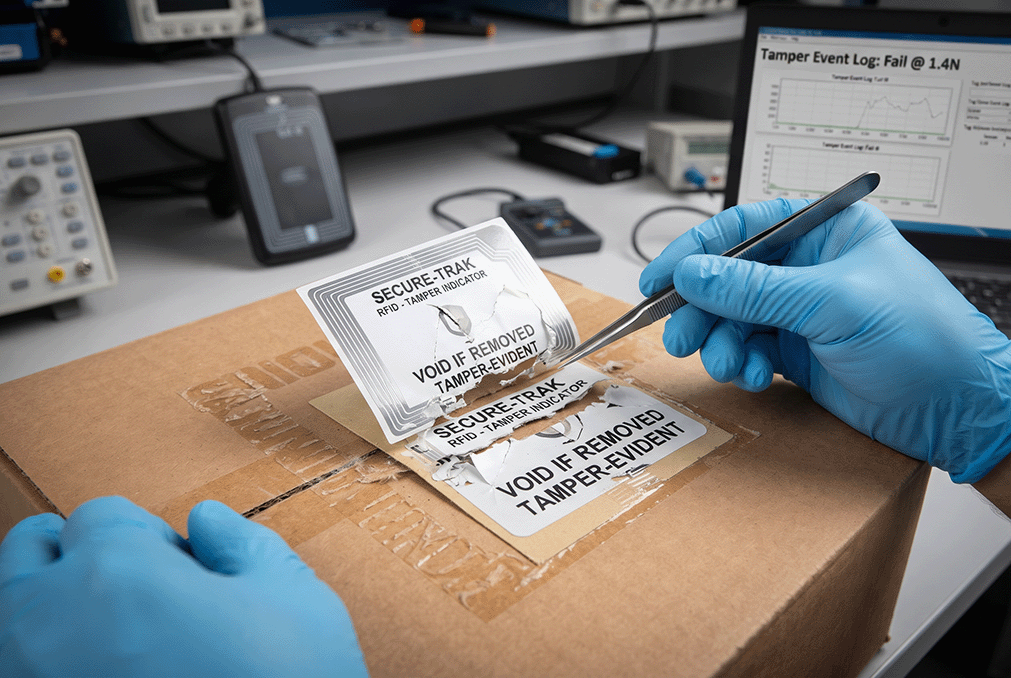
Testing normal-use survival
Normal-use survival testing verifies the tag does not fail or falsely trigger during legitimate use. Test the tag through its normal life — application to the item, handling, transport, and the environmental conditions (temperature, humidity, light abrasion, normal flexing) it will face in legitimate use — confirming it survives without breaking, triggering, or degrading, so legitimate items do not falsely appear tampered. The tag must withstand the ordinary stresses of its application without the fragile tamper mechanism failing prematurely. Test realistic normal-use conditions across samples to confirm the tag reliably survives legitimate use. A tag that falsely triggers in normal handling causes false alarms and rejected goods. Verifying survival of normal use without false triggering is essential alongside reliable tampering detection. Understanding that normal-use survival testing — subjecting the tag to its legitimate application, handling, and environment and confirming it survives without false triggering — verifies usability ensures the tag does not fail in legitimate use, the other side of the paradox that must be confirmed so the tamper-evident tag does not disrupt normal operations.
Adhesion and application testing
Adhesion and application testing matter for tamper-evident tags, since correct application is essential to both function and survival. Test that the tag adheres correctly to the intended surfaces — bonding as designed so it is secure in normal use yet triggers on removal (the adhesion is often integral to the tamper mechanism, where removal attempts break the tag because it is bonded strongly). Confirm the tag applies reliably (without triggering during correct application) and adheres to your surfaces and materials appropriately. Test application and adhesion on representative surfaces, confirming correct bonding and that the tamper function works from the applied state. Poor adhesion can cause both false triggering (if the bond fails) and failure to trigger (if not bonded enough to break on removal). Verifying correct adhesion and application is important. Understanding that adhesion and application testing verify the tag bonds correctly — secure in use yet triggering on removal, applied without premature triggering — ensures the tag functions from its applied state, since correct adhesion is often integral to the tamper mechanism and to avoiding false triggers.
Confirming reads: intact and tampered states
Confirming reads in both states is the essential RFID verification for tamper-evident tags. After testing, confirm that an intact (untampered) tag reads reliably — providing its identity and function normally — since the tag must work when not tampered, and that a tampered tag shows the change electronically where applicable: for tags with electronic tamper detection, the read reflects the tampered status; for frangible tags, the tampered tag no longer reads (its destruction evidences tampering). So verify both that intact tags read correctly (no false failure) and that tampered tags evidence tampering as designed (electronically or by not reading). This confirms the tag's RFID function works in the intact state and correctly reflects tampering. Testing reads in both states verifies the tamper-evident tag functions as intended. Understanding that reads must be confirmed in both states — intact tags reading reliably, tampered tags evidencing tampering (by status or by not reading) — ensures the tag functions correctly whether tampered or not, completing the verification that the tamper-evident tag both works normally and reveals tampering.
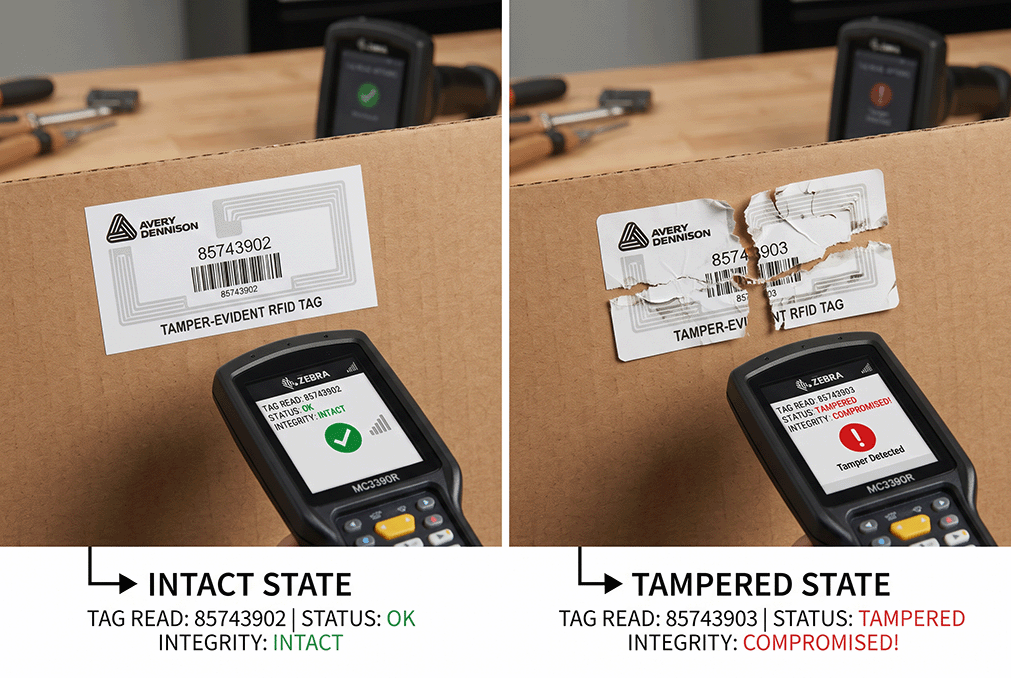
Getting durable tamper-evident tags
To get tamper-evident tags proven for your application, specify your use — the surfaces, the normal-use conditions (handling, transport, environment), the tampering the tag must detect, and whether electronic tamper detection or frangible evidence is needed — and request the tag's tamper mechanism and durability characteristics. Obtain samples to test both sides of the paradox: that tampering reliably triggers, and that the tag survives normal use without false triggering, plus adhesion and reads in both states, before ordering in quantity. As a manufacturer of RFID tags including tamper-evident and security label designs, our team can help you select tamper-evident tags balancing reliable tampering detection with normal-use durability, and provide samples for testing. Tamper-evident tags' value depends on reliably revealing tampering while surviving legitimate use, and verifying both for your application ensures they work. To get durable tamper-evident RFID tags proven for your use, contact our team with your surfaces, conditions, and tamper requirements for guidance and samples.
Frequently Asked Questions
What is the paradox of tamper-evident tags?
They must be durable enough to survive their normal life — application, handling, transport, and the environment — without breaking or triggering, so they function normally when not tampered with; yet fragile or reactive enough that tampering (attempted removal, opening, or interference) reliably breaks or triggers them, revealing the tampering. These pull in opposite directions: too durable and it may not trigger reliably; too fragile and it may falsely trigger in normal use. A good tag balances this, and testing must verify both sides.
Why is durability testing important for tamper-evident tags?
Because both failure modes undermine the tag's purpose. If it does not reliably trigger on tampering (too durable or an unreliable mechanism), tampering goes undetected, defeating security and allowing intrusion, counterfeiting, or transfer. If it falsely triggers or breaks in normal use (too fragile or poorly made), legitimate items appear tampered, causing false alarms, rejected goods, and lost trust. Both are costly, so testing verifies the tag triggers reliably on tampering and survives normal use without false triggering.
How is tamper-trigger reliability tested?
By performing the tampering the tag must detect — attempting to remove, peel, open, or interfere with it as a tamperer would — and confirming the tag reliably triggers: the frangible tag breaks or destroys, the antenna severs, or the detectable change occurs, evidencing the tampering (visibly and/or electronically per the design). This is tested consistently across samples and tampering methods to confirm the tag triggers reliably, not just sometimes, since a tag that does not reliably trigger on removal fails at its core security purpose.
How do you test that a tag survives normal use?
By subjecting the tag to its normal life — application to the item, handling, transport, and the environmental conditions (temperature, humidity, light abrasion, normal flexing) of legitimate use — and confirming it survives without breaking, triggering, or degrading, so legitimate items do not falsely appear tampered. The fragile tamper mechanism must withstand ordinary application stresses without failing prematurely. This is tested across samples in realistic conditions, since a tag that falsely triggers in normal handling causes false alarms and rejected goods.
How are reads verified for tamper-evident tags?
In both states. Confirm an intact (untampered) tag reads reliably — providing its identity and function normally, so it works when not tampered — and that a tampered tag evidences the tampering: for tags with electronic tamper detection, the read reflects the tampered status; for frangible tags, the tampered tag no longer reads (its destruction evidences tampering). Verifying both that intact tags read correctly and tampered tags evidence tampering confirms the tag functions in the intact state and correctly reflects tampering.
Get tamper-evident RFID tags that work reliably
We manufacture tamper-evident RFID tags balancing reliable tampering detection with normal-use durability — with samples to verify both the trigger and the survival for your application.
Discuss tamper-evident tags See RFID stickers