


We will cover accurate inventory and fewer wasted miles, optimized loads and routing, reduced spoilage and waste, leaner warehousing, and measuring sustainability gains.
Key takeaways
- Sustainability and efficiency align — reducing waste cuts both cost and carbon.
- Accurate inventory reduces unnecessary shipments and wasted transport miles.
- Optimized loads, less spoilage, and leaner warehousing lower emissions.
- RFID visibility provides the data to measure and improve sustainability.
Accurate inventory means fewer wasted miles
Transport emissions are a major part of the logistics carbon footprint, and accurate inventory reduces unnecessary transport. When inventory is inaccurate, organizations make avoidable shipments — emergency deliveries to cover stockouts that should not have happened, redundant movements, and transport driven by uncertainty rather than need. The accurate, real-time inventory visibility RFID provides reduces these wasted miles by ensuring stock decisions are based on what is actually available, avoiding the unnecessary shipments that inaccuracy causes. Fewer emergency and redundant deliveries mean fewer vehicle miles and the emissions they produce. For logistics operations, the transport efficiency that accurate inventory enables directly reduces carbon emissions while cutting transport costs. The visibility RFID provides into actual stock levels and locations supports the shipping decisions that minimize unnecessary transport, making accurate inventory a foundation for both efficient and lower-carbon logistics, where knowing exactly what is where prevents the wasted miles that uncertainty and inaccuracy would otherwise cause across the operation.
Optimized loads and routing
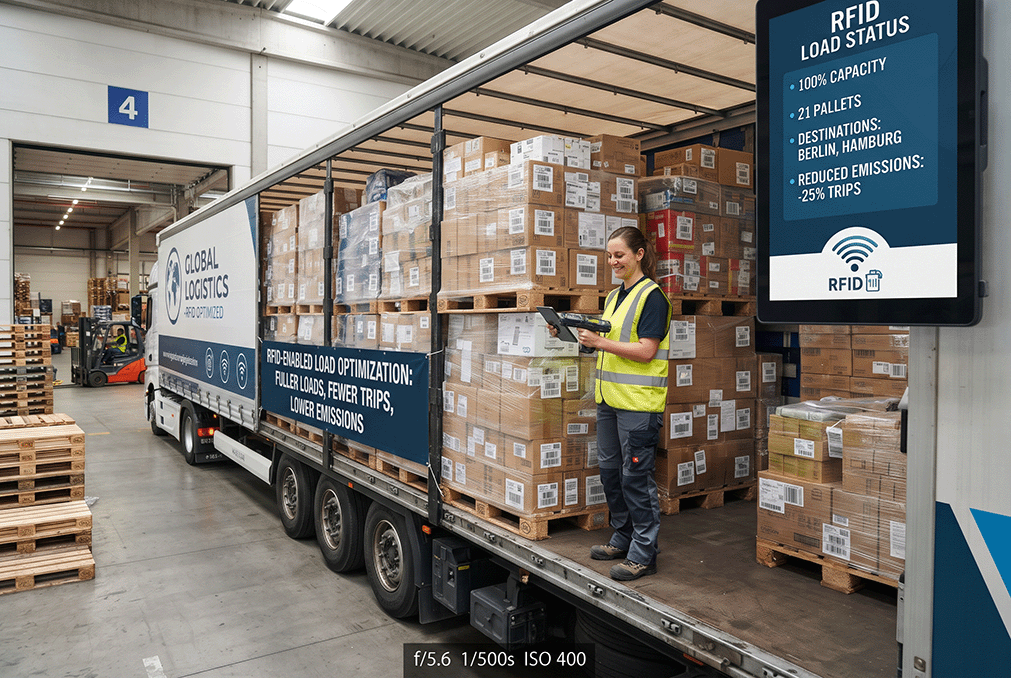
Optimization of how goods are loaded and routed reduces emissions, and RFID visibility supports it. Knowing precisely what goods are present and their status enables better load planning — filling vehicles efficiently rather than running partially loaded or making extra trips. The visibility into goods and their movement supports routing and consolidation decisions that reduce the transport needed. Maximizing how much each shipment carries and minimizing the trips required lowers the emissions per unit moved. For logistics operations, the load and routing optimization that good visibility enables improves transport efficiency, reducing both costs and the carbon footprint of moving goods. RFID contributes the accurate, real-time information about goods that supports these optimization decisions. By enabling fuller loads, smarter consolidation, and more efficient routing through the visibility it provides, RFID helps logistics operations move goods with fewer trips and less transport, directly reducing the emissions associated with moving products through the supply chain, where every avoided trip and fuller load translates into lower carbon output.
Reduced spoilage and waste
Waste represents both an environmental and economic loss, and RFID reduces it across the supply chain. Products that spoil, expire, or are wasted because of poor visibility represent wasted resources — the energy, materials, and transport invested in them lost when they are discarded. The freshness tracking, inventory accuracy, and rotation that RFID enables reduce spoilage and waste, ensuring products are used before they expire and reducing the volume discarded. Less waste means the resources embodied in those products are not lost, reducing the environmental impact of producing and transporting goods that are ultimately thrown away. For supply chains handling perishable or time-sensitive goods especially, the waste reduction RFID enables has meaningful environmental benefits alongside the cost savings. By reducing the spoilage and waste that squander the resources invested in products, RFID lowers the environmental footprint of the supply chain, ensuring more of what is produced and transported is actually used rather than discarded, which avoids the wasted carbon embodied in products that would otherwise be thrown away unused.
Leaner, more efficient warehousing
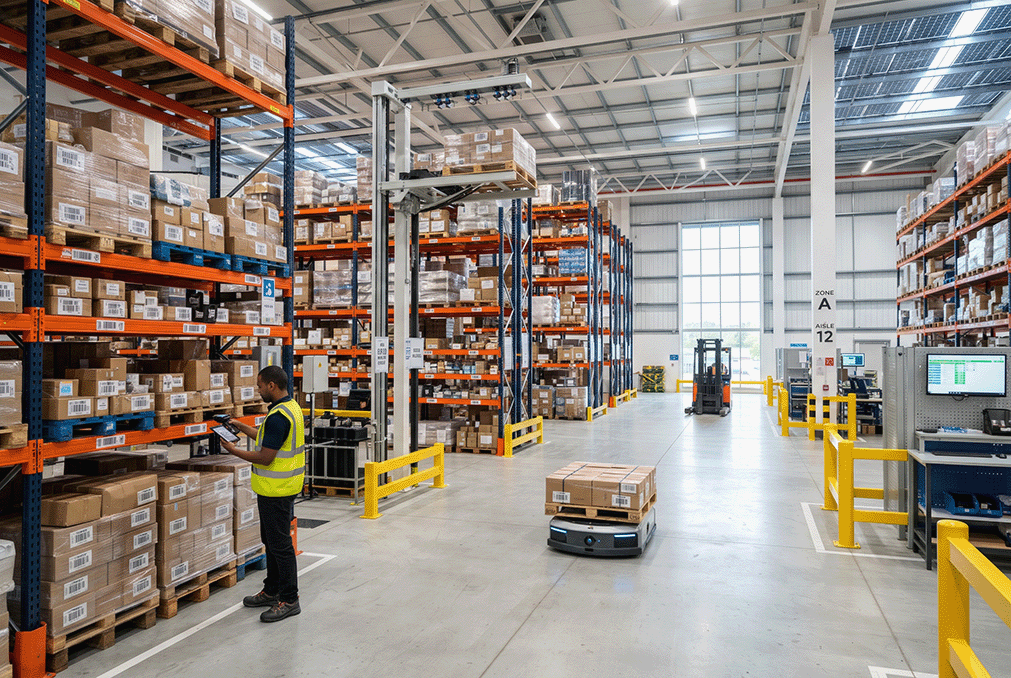
Warehousing consumes energy, and the efficiency RFID brings reduces this footprint. More accurate inventory and efficient operations can reduce the need for excess storage, buffer stock, and the space and energy they consume. Efficient warehouse operations, with less wasted movement and better space utilization, reduce the energy used in warehousing. The visibility RFID provides supports leaner inventory and more efficient warehouse operations, reducing the resources warehousing consumes. While warehousing will always require energy, the efficiency gains RFID enables — leaner inventory, better space use, less wasted activity — reduce the energy footprint relative to less efficient operations. For organizations seeking to reduce their environmental impact, the warehousing efficiency RFID supports contributes to lower energy use and emissions. By enabling leaner inventory and more efficient warehouse operations, RFID reduces the energy and resources warehousing consumes, contributing to a lower overall carbon footprint for the logistics operation, where efficiency in storage and handling translates directly into reduced energy consumption and emissions.
Visibility for sustainable decisions
The data RFID generates supports the broader sustainability decisions that reduce environmental impact. The visibility into goods, movement, and operations provides information that helps organizations identify inefficiencies, measure their impact, and make decisions that improve sustainability. Understanding how goods flow, where waste occurs, and how operations perform enables targeted improvements that reduce environmental impact. This data-driven insight supports the continuous improvement that drives sustainability gains over time. For organizations committed to reducing their footprint, the visibility RFID provides is a tool for understanding and improving the environmental performance of their logistics. By providing the data to identify inefficiencies and measure performance, RFID supports the informed decisions that drive sustainability improvements across logistics operations. The visibility that underpins efficiency also underpins sustainability, giving organizations the information to reduce waste, optimize operations, and lower their carbon footprint through informed, measurable action rather than guesswork, making RFID data a foundation for genuine, trackable environmental progress.
Measuring and reporting sustainability gains
Measurement is increasingly important as organizations report on sustainability, and RFID data supports it. The information RFID provides about operations, efficiency, waste, and transport can contribute to measuring and reporting environmental performance and improvements. As organizations face requirements and expectations to measure and report their environmental impact, the data from systems like RFID helps quantify performance and demonstrate progress. Being able to measure the efficiency and waste-reduction gains that reduce carbon footprint supports sustainability reporting and accountability. For organizations seeking to demonstrate genuine environmental progress, the measurable improvements RFID enables — in efficiency, waste, and transport — provide concrete data. While RFID is one part of a broader sustainability effort, the visibility and data it provides support the measurement and reporting that increasingly matter. As a manufacturer supporting efficient, sustainable logistics through reliable RFID products, our team helps organizations deploy the tracking that underpins these gains. To explore RFID for sustainable, efficient logistics operations, contact our team for guidance on tags and approach suited to your supply chain.
Frequently Asked Questions
How does RFID reduce carbon footprint in logistics?
By bringing accuracy and visibility that reduce inefficiency: accurate inventory cuts unnecessary transport miles, optimized loads and routing reduce trips, less spoilage avoids wasted resources, and leaner warehousing lowers energy use. The waste and excess that harm the environment also cost money, so efficiency and sustainability align.
Does accurate inventory really reduce emissions?
Yes. Inaccurate inventory causes avoidable shipments — emergency deliveries for stockouts, redundant movements, and transport driven by uncertainty. Accurate, real-time RFID visibility ensures decisions are based on actual stock, reducing the unnecessary vehicle miles and emissions that inaccuracy would otherwise cause.
How does RFID reduce waste?
Through freshness tracking, inventory accuracy, and proper rotation that ensure products are used before they expire, reducing spoilage and the volume discarded. Less waste means the energy, materials, and transport invested in products are not lost, lowering the environmental footprint of the supply chain.
Can RFID help with sustainability reporting?
Yes. The data RFID provides about operations, efficiency, waste, and transport can contribute to measuring and reporting environmental performance and improvements. As organizations face expectations to quantify their impact, this data helps demonstrate concrete, measurable progress in efficiency and waste reduction.
Is RFID a complete sustainability solution?
No — RFID is one part of a broader sustainability effort, but a valuable one. By reducing transport miles, waste, and energy use through efficiency and visibility, and by providing data to measure and improve, it contributes meaningfully to lowering the carbon footprint of logistics operations alongside other initiatives.
Build efficient, lower-carbon logistics on reliable RFID
We help organizations deploy the dependable RFID tracking that underpins efficiency and sustainability gains — reducing waste, miles, and energy across the supply chain.
Discuss sustainable logistics Explore RFID tags