


We will cover digital identity for physical objects, real-time production tracking, automation, traceability, the connected factory, and the physical-digital bridge.
Key takeaways
- Industry 4.0 connects the factory into one intelligent, data-driven system.
- RFID gives physical objects the digital identity smart systems require.
- Real-time tracking and automation depend on knowing where objects are.
- RFID is the physical-digital bridge that underpins the smart factory.
Digital identity for physical objects
The foundation of RFID's role in Industry 4.0 is giving physical objects a digital identity. In a smart factory, the digital systems must know about the physical objects — components, products, tools, materials — to manage and optimize production. RFID provides this by tagging objects with identities that systems can read, making each physical item visible and trackable in the digital realm. This digital identity is what lets connected systems incorporate physical objects into their data and decisions, bridging the gap between the physical reality of manufacturing and the digital systems managing it. Without a way to identify and track physical objects, the digital intelligence of Industry 4.0 cannot fully manage the physical production it governs. The digital identity RFID provides to physical objects is the foundational enabler, making the physical world visible to the digital systems that define smart manufacturing. By giving every relevant physical object an identity that connected systems can read and track, RFID provides the essential link that lets Industry 4.0 systems manage the physical production flowing through the smart factory.
Real-time production tracking
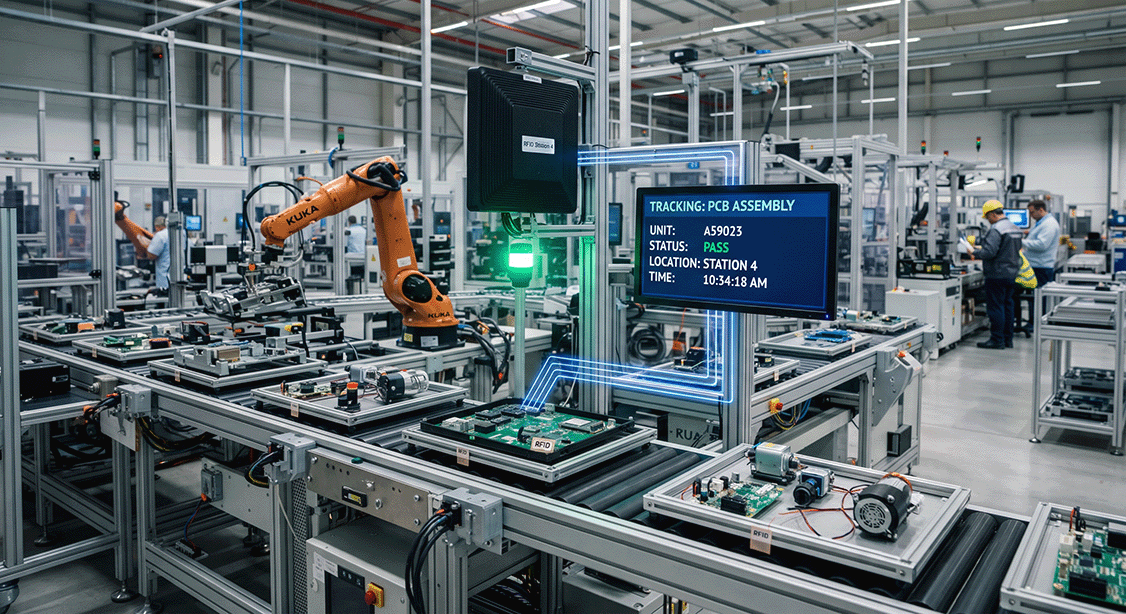
Real-time visibility of production is central to smart manufacturing, and RFID enables it. By tracking tagged components and products through the production process, RFID provides real-time visibility of where items are, what stage they have reached, and how production is flowing. This live production tracking feeds the data-driven systems that monitor, manage, and optimize manufacturing in Industry 4.0. Knowing the real-time status and location of items in production enables responsive management, optimization, and the data analysis that drives improvement. For smart manufacturing, this real-time production visibility is essential, providing the live data that connected systems need to manage production intelligently. The real-time production tracking RFID enables gives the smart factory the current, accurate view of production flow that Industry 4.0 depends on, supporting the responsive, optimized, data-driven manufacturing that defines the connected factory. By providing live visibility of items moving through production, RFID supplies the real-time data that lets Industry 4.0 systems monitor and optimize manufacturing as it happens across the factory.
Enabling automation
Automation is a hallmark of Industry 4.0, and RFID supports it by providing the identification automated systems need. Automated processes — robotic handling, automated routing, machine decisions — depend on knowing what objects are present and which is which, and RFID provides this identification automatically. When automated systems can read RFID to identify objects, they can act appropriately — routing items correctly, applying the right processes, making decisions based on what each object is. This identification underpins the automation that smart manufacturing relies on, letting automated systems work with physical objects intelligently. For Industry 4.0, the identification RFID provides to automated systems is essential to the automation that increases efficiency and reduces manual intervention. By giving automated systems the ability to identify objects automatically, RFID enables the intelligent automation that defines smart manufacturing, letting machines and systems handle, route, and process physical objects based on automatic identification. The role RFID plays in providing identification for automated systems supports the automation central to Industry 4.0, where machines acting on automatically identified objects drive the efficient, autonomous production of the smart factory.
End-to-end traceability
Traceability is important in modern manufacturing, and RFID provides it through the production process and beyond. By tracking tagged items through manufacturing, RFID creates a record of each item's path — what processes it underwent, when, and where — providing traceability valuable for quality, compliance, and accountability. This traceability supports quality management, regulatory compliance, and the ability to trace products through production and into the supply chain. For manufacturing where traceability matters — quality-critical, regulated, or accountability-sensitive production — the traceability RFID enables is valuable. In Industry 4.0, this end-to-end traceability supports the quality and compliance that smart manufacturing demands. The traceability RFID provides, recording each item's journey through production, supports the quality management, compliance, and accountability that modern manufacturing requires, extending visibility from production into the broader supply chain. By creating a traceable record of items through manufacturing, RFID supports the traceability that quality, compliance, and accountability demand in the smart factory, contributing to the quality assurance and regulatory compliance that Industry 4.0 manufacturing must deliver.
The connected factory
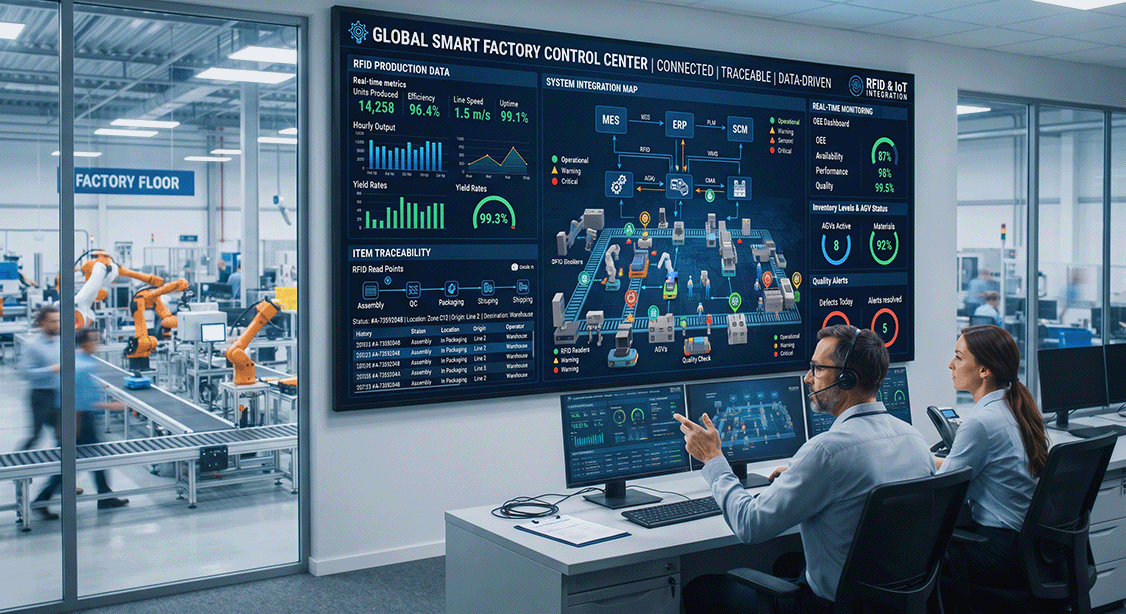
Integration defines Industry 4.0, and RFID data integrates into the connected factory's systems. The identification and tracking data RFID provides feeds into the manufacturing execution systems, enterprise systems, and analytics that manage the smart factory, becoming part of the integrated data environment that Industry 4.0 creates. This integration means RFID is not an isolated tracking tool but a contributor to the connected, data-driven factory, providing physical-object data that informs the systems managing production. For Industry 4.0, this integration of RFID data into the broader connected environment is what makes the physical-object visibility useful at scale. The integration of RFID-provided data into the connected factory's systems makes the physical world part of the digital intelligence that manages smart manufacturing. By feeding physical-object identification and tracking data into the integrated systems of the connected factory, RFID contributes essential information to the data-driven environment that defines Industry 4.0, ensuring the physical production is visible to and managed by the connected systems that orchestrate the smart factory.
The physical-digital bridge — built on reliable tags
RFID ultimately serves as the physical-digital bridge that makes Industry 4.0 possible, and this bridge depends on reliable tags suited to the manufacturing environment. The manufacturing environment is demanding — metal, machinery, and industrial conditions — so the tags must perform reliably there, often requiring anti-metal tags for mounting on metal components and equipment, and durable construction for industrial use. Reliable, suitable tags ensure the physical-digital bridge functions dependably. As a manufacturer of RFID tags including anti-metal and industrial tags, our team supplies the tags that enable RFID's role in smart manufacturing, suited to the factory environment. Building Industry 4.0's physical-digital bridge on reliable, environment-appropriate tags ensures the foundation is solid. For smart manufacturing, the role RFID plays depends on tags that perform in the industrial setting, and getting this foundation right enables the connected factory. To explore RFID tags for Industry 4.0 and smart manufacturing, contact our team for tags suited to your production environment.
Frequently Asked Questions
What role does RFID play in Industry 4.0?
RFID gives physical objects — components, products, tools, materials — a digital identity that connected systems can track and act on, bridging the physical and digital worlds. This lets the smart factory's digital intelligence see and manage the physical production flowing through it, which it otherwise could not do.
How does RFID enable smart manufacturing?
By providing real-time tracking of items through production, identification for automated systems, end-to-end traceability, and data that integrates into the connected factory's systems. These capabilities give Industry 4.0 the physical-object visibility and identification its data-driven, automated manufacturing depends on.
Why do automated systems need RFID?
Automated processes — robotic handling, automated routing, machine decisions — depend on knowing what objects are present and which is which. RFID provides this identification automatically, letting automated systems route items correctly, apply the right processes, and make decisions based on what each object is.
What RFID tags work in manufacturing?
The manufacturing environment is demanding — metal, machinery, and industrial conditions — so tags must perform reliably there. This often requires anti-metal tags for mounting on metal components and equipment, and durable construction for industrial use, ensuring the tracking functions dependably in the factory.
How does RFID support traceability in manufacturing?
By tracking tagged items through production, RFID creates a record of each item's path — what processes it underwent, when, and where — providing traceability for quality, compliance, and accountability. This supports quality management, regulatory compliance, and tracing products through production into the supply chain.
Build your smart factory's foundation on reliable tags
We supply RFID tags — including anti-metal and industrial tags — suited to the demanding manufacturing environment, providing the dependable physical-digital bridge Industry 4.0 requires.
Discuss your smart factory Explore anti-metal tags