


We will cover what smart labels are, how RFID label printers work, materials and adhesives, key applications, choosing the right label, and integration with existing labeling.
Key takeaways
- Printable RFID labels combine a printable face with an embedded RFID inlay.
- RFID label printers encode the chip and print the face in a single pass.
- Materials and adhesives are chosen to suit the surface and environment.
- Smart labels are widely used in retail, logistics, and asset labeling.
What printable RFID labels are
A printable RFID label, or smart label, integrates an RFID inlay — the chip and antenna — into a conventional printable label. The result has a printable face for human-readable text, graphics, and barcodes, and beneath it an embedded inlay providing RFID functionality. This combination means a single label serves both visual and contactless purposes: people and barcode scanners read the printed face, while RFID readers read the inlay. Smart labels apply like ordinary adhesive labels, integrating into existing labeling workflows while adding RFID capability. The inlay is typically thin and hidden beneath the print, so the label looks much like a standard one. This integration of RFID into the familiar label format is what makes smart labels so practical and widely adopted, requiring no fundamental change to how labels are applied while adding powerful identification and tracking. Understanding that a printable RFID label combines a printable face with an embedded inlay clarifies how this versatile format bridges conventional labeling and RFID technology in a single, easy-to-use product.
How RFID label printers work
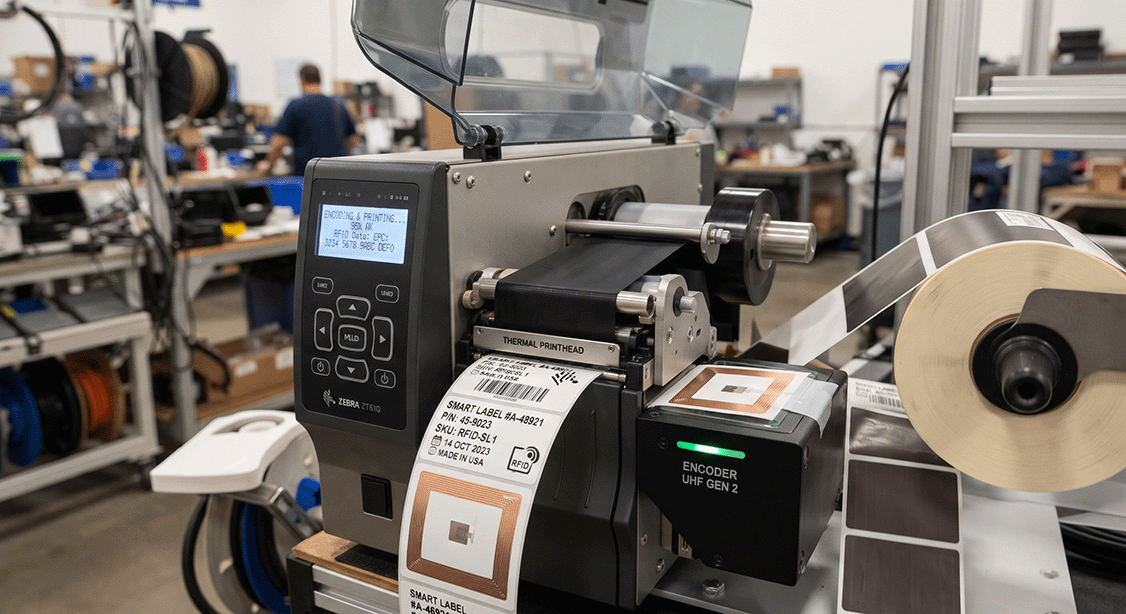
RFID label printers both encode the chip and print the face in a single pass, producing ready-to-use smart labels efficiently. These specialized printers resemble standard label printers but add RFID encoding capability: as a label passes through, the printer writes data to the embedded chip and prints the visible face, producing a label that is both printed and encoded. This means smart labels can be produced on demand, encoding unique data and printing matching human-readable information together. The ability to print and encode in one step makes smart-label production practical and integrated into labeling operations. Printers verify the encoding to ensure the chip is correctly written, and a label that fails encoding can be flagged. For operations producing smart labels, RFID label printers provide an efficient way to create encoded, printed labels as needed. Understanding that RFID label printers encode and print together, producing ready-to-use labels in one pass, explains how smart labels are practically produced, integrating RFID encoding seamlessly into the familiar process of printing and applying labels.
Materials and adhesives
Smart label materials and adhesives are chosen to suit the surface and environment, like conventional labels. The face material — paper or synthetic — is selected for the print quality, durability, and conditions required, with synthetic materials offering more durability for demanding environments. The adhesive is chosen for the surface the label applies to and the conditions it faces, ensuring the label adheres reliably. These choices matter because a smart label must stay attached and legible through its use, just as the embedded inlay must read reliably. Selecting appropriate face materials and adhesives ensures the label performs physically while the RFID functions. For different applications — retail tags, logistics labels, asset labels in harsh conditions — the appropriate materials and adhesives differ. Understanding that smart labels use materials and adhesives suited to the surface and environment, like any label, ensures the physical label performs alongside the RFID. Choosing the right label materials and adhesives for the application ensures smart labels adhere reliably and remain legible while delivering their RFID capability, combining physical label performance with contactless functionality.
Key applications of smart labels
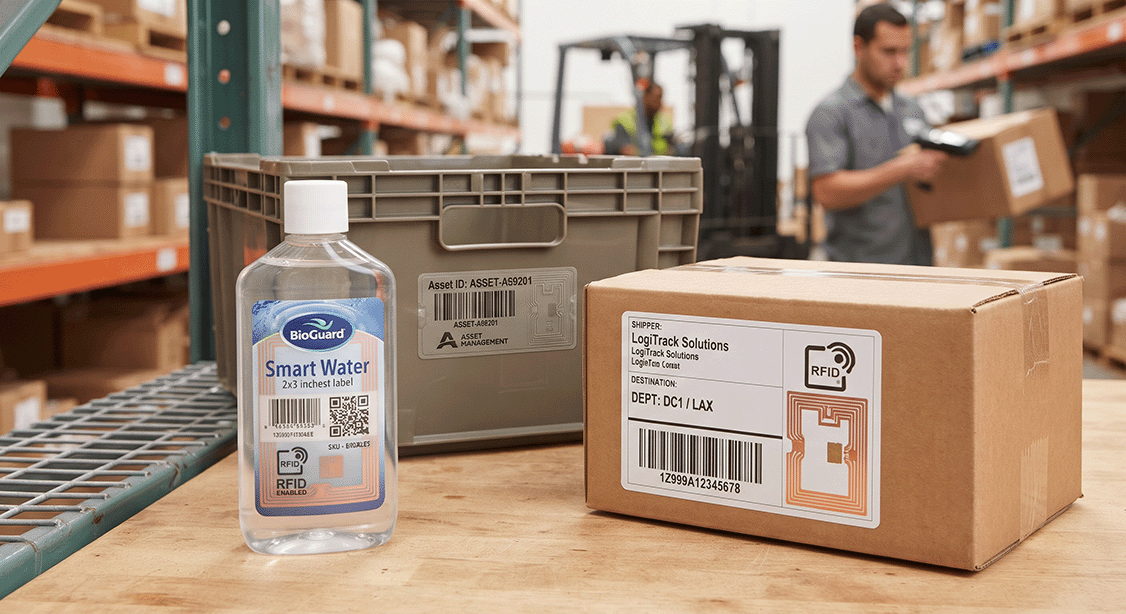
Printable RFID labels are used across many applications where the combination of printing and RFID is valuable. In retail, smart labels on products or hang tags enable item-level inventory and the visible product information customers and staff need. In logistics and supply chain, smart labels on cartons and pallets enable tracking while showing shipping information. In asset management, smart labels identify and track assets while displaying asset details. The versatility of having both a printed face and RFID makes smart labels suitable wherever items need both human-readable labeling and contactless tracking. This dual capability is why smart labels are among the most widely adopted RFID formats, fitting into existing labeling practices while adding RFID. For applications needing both visible labeling and RFID identification — which describes much of retail, logistics, and asset management — printable RFID labels provide an ideal solution. Understanding the key applications shows why smart labels are so widely used: they serve the many situations needing both printed information and RFID capability in a single, familiar label format.
Choosing the right smart label
Choosing a smart label involves matching the inlay, face material, adhesive, and size to the application. Select the inlay — chip and antenna — appropriate to the frequency, read range, and any material challenges of the application, just as with any tag. Choose the face material and adhesive for the surface, environment, and print needs. Pick the size to suit the item and the information to be printed. These choices ensure the smart label performs both physically and as an RFID tag in the specific application. As with tag selection generally, matching the smart label to the use is essential to reliable performance. For applications on metal or near liquid, smart labels with appropriate inlays are needed. Understanding that choosing a smart label means matching inlay, materials, adhesive, and size to the application ensures the label suits its use. As a manufacturer of RFID labels and stickers, our team helps customers select smart labels suited to their application, frequency, surface, and environment, ensuring reliable performance from a label matched to the specific requirements.
Integrating with existing labeling
Smart labels integrate into existing labeling operations, which is a major practical advantage. Because they apply like conventional labels and can be printed and encoded with appropriate printers, smart labels fit into established labeling workflows with the addition of RFID encoding and reading. Operations already printing and applying labels can adopt smart labels, adding RFID capability without fundamentally changing how labels are handled. This ease of integration lowers the barrier to adopting RFID for operations already using labels, since the familiar label format and application process remain. The main additions are RFID-capable printers and readers and the systems to use the RFID data. For organizations considering RFID, the integration of smart labels with existing labeling makes adoption more approachable. Understanding that smart labels integrate with existing labeling, adding RFID to a familiar process, shows why they are an accessible entry point to RFID. Adopting printable RFID labels lets operations build on their existing labeling while gaining RFID capability, making smart labels a practical bridge from conventional labeling to contactless identification and tracking.
Frequently Asked Questions
What is a printable RFID label?
A printable RFID label, or smart label, integrates an RFID inlay — chip and antenna — into a conventional printable label. It has a printable face for text, graphics, and barcodes, plus an embedded inlay providing RFID functionality, so a single label serves both visual and contactless purposes and applies like an ordinary sticker.
How does an RFID label printer work?
An RFID label printer encodes the embedded chip and prints the visible face in a single pass. As a label passes through, the printer writes data to the chip and prints the face, producing a ready-to-use encoded, printed label on demand. Printers verify the encoding to ensure the chip is correctly written.
What are smart labels used for?
Smart labels are used in retail for item-level inventory and product information, in logistics for tracking cartons and pallets while showing shipping data, and in asset management for tracking assets while displaying details. Their combination of printed face and RFID suits any item needing both human-readable labeling and contactless tracking.
How do I choose the right smart label?
Match the inlay (chip and antenna) to the frequency, read range, and material challenges, choose the face material and adhesive for the surface and environment, and pick the size for the item and printed information. For metal or liquid-adjacent surfaces, smart labels with appropriate inlays are needed.
Can smart labels integrate with existing labeling?
Yes. Because they apply like conventional labels and can be printed and encoded with appropriate printers, smart labels fit into established labeling workflows with the addition of RFID encoding and reading. This makes adopting RFID more approachable for operations already printing and applying labels.
Add intelligence to your labels
We manufacture RFID smart labels and stickers with inlays suited to your frequency, surface, and environment — bridging conventional labeling and contactless RFID in a single product.
Discuss your labeling needs Explore RFID stickers