


We will cover direct thermal, thermal transfer, inkjet printing, durability and quality trade-offs, color and encoding, and choosing the right method.
Key takeaways
- Direct thermal, thermal transfer, and inkjet each print RFID label faces differently.
- Direct thermal is simple but less durable; thermal transfer is more durable.
- Inkjet supports full color for richer printed labels.
- The right printing method depends on durability, quality, color, and cost needs.
Direct thermal printing
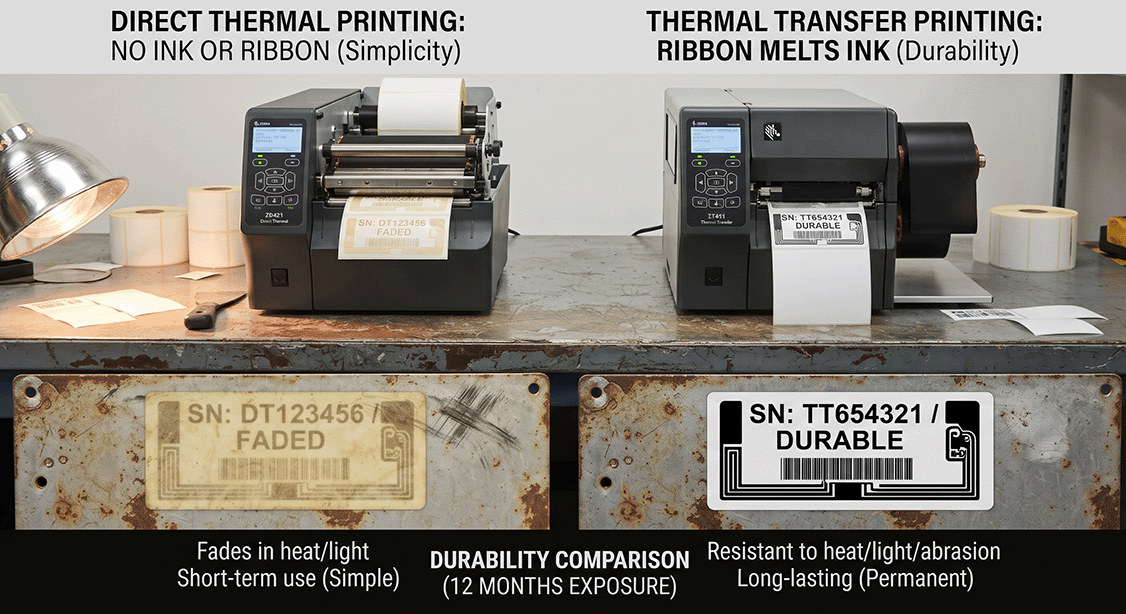
Direct thermal printing produces an image by applying heat to heat-sensitive label material, without ink, ribbon, or toner. The printhead heats areas of specially coated thermal material, which darkens to form the image. This makes direct thermal simple and economical, with no consumables beyond the labels themselves, and it is widely used for labels with a limited lifespan. However, direct thermal images can fade over time and with exposure to heat, light, and abrasion, so they suit applications where the label has a relatively short life and is not exposed to harsh conditions. For shipping labels, short-term tags, and applications where longevity is not critical, direct thermal's simplicity and economy are attractive. Understanding that direct thermal prints without ink by heating sensitive material, offering simplicity and economy but limited durability, clarifies where it fits. Direct thermal printing suits RFID labels with a shorter lifespan in benign conditions, providing an economical, consumable-free printing method where the limited durability of the printed image is acceptable for the application's needs.
Thermal transfer printing
Thermal transfer printing produces a durable image by melting ink from a ribbon onto the label. The printhead heats a ribbon, transferring ink onto the label material to form the image. This requires a ribbon as a consumable but produces durable, long-lasting prints resistant to fading, heat, light, and abrasion. Thermal transfer suits applications where the label must last and remain legible over time or in demanding conditions, such as asset labels, product labels, and tags facing harsher environments. The durability of thermal transfer printing makes it the choice when longevity and resistance matter, despite the ribbon consumable. For RFID labels needing a durable printed face that lasts, thermal transfer is commonly used. Understanding that thermal transfer melts ribbon ink onto the label for a durable, long-lasting image clarifies its advantage over direct thermal. Thermal transfer printing suits RFID labels requiring durability and longevity, providing a resistant, long-lasting printed image for applications where the label must remain legible over time or withstand demanding conditions that would degrade a direct thermal print.
Inkjet printing
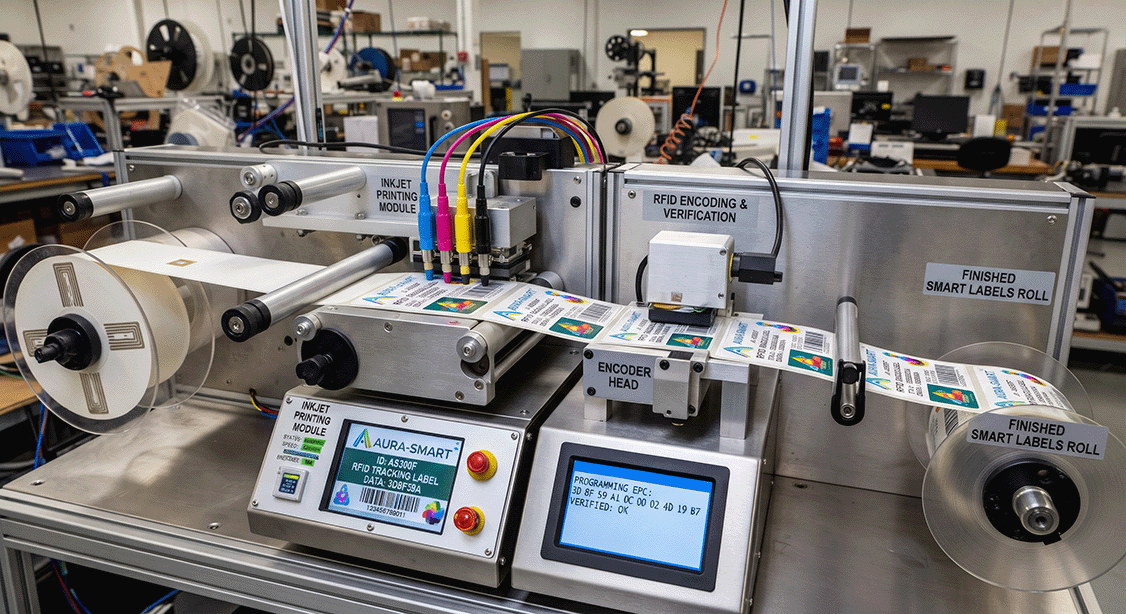
Inkjet printing produces images by spraying ink onto the label, supporting full color and high-quality graphics. Unlike thermal methods that typically produce monochrome images, inkjet can print in full color with photographic quality, suiting labels that need rich color, detailed graphics, or branding. Inkjet is used where the visual quality and color of the label matter, such as branded labels, colorful product labels, and labels with detailed graphics. The full-color capability distinguishes inkjet from thermal methods, enabling richer printed faces. For RFID labels where color and graphic quality are important, inkjet provides capabilities thermal printing does not. Understanding that inkjet sprays ink for full-color, high-quality printing clarifies its role for visually rich labels. Inkjet printing suits RFID labels requiring full color, detailed graphics, or high visual quality, providing the rich, colorful printed faces that thermal methods cannot, for applications where the label's visual presentation and branding are important alongside its RFID function.
Durability and quality trade-offs
The printing methods trade off durability, quality, color, and cost. Direct thermal is simple and economical but less durable, suiting short-life labels in benign conditions. Thermal transfer is more durable and long-lasting, suiting labels that must endure, at the cost of a ribbon consumable. Inkjet offers full color and high quality, suiting visually rich labels. The right choice balances these factors for the application: how long the label must last, what conditions it faces, whether color is needed, and cost considerations. No method is universally best; each suits different needs. Understanding these trade-offs prevents choosing a method ill-suited to the application — using direct thermal where durability is needed, or thermal transfer where full color is required. Matching the printing method to the durability, quality, color, and cost requirements ensures the printed label suits its use. Understanding the trade-offs among the printing methods ensures the right choice for the application's demands. Selecting the printing method that matches the durability, quality, color, and cost needs of the label ensures the printed face performs as the application requires.
Color, encoding, and the complete label
The printing works alongside RFID encoding to produce the complete smart label. While the printing method determines the visible face, the embedded chip is separately encoded with data, and RFID label printers can encode the chip and print the face together as discussed. So a complete smart label combines the printed face — by the chosen method — with the encoded chip, both produced in the labeling process. Color choices depend on the printing method, with full color requiring inkjet and thermal methods typically monochrome. The complete label thus reflects both the printing method chosen for the face and the encoding programmed into the chip. Understanding that printing and encoding together produce the complete smart label, with color depending on the method, clarifies how the visible and RFID aspects combine. The complete RFID label integrates the printed face, produced by the chosen printing method with its color and durability characteristics, and the encoded chip, programmed with data, combining visual and RFID functionality in one label produced through the labeling process that handles both printing and encoding.
Choosing the right printing method
Choosing the printing method means matching it to your label's requirements. Consider how long the label must last and what conditions it faces — choosing thermal transfer for durability, direct thermal for short-life economy. Consider whether color and graphic quality matter — choosing inkjet for full color. Consider cost, including consumables and volume. Consider the label's application and how it must perform visually and physically. Matching these requirements to the printing method ensures the right choice. For many RFID labels, the durability need is decisive between direct thermal and thermal transfer, while color needs point to inkjet. As a manufacturer of RFID labels and stickers, our team helps customers choose label printing suited to their application's durability, quality, color, and cost needs, and supplies labels accordingly. Understanding that choosing the printing method means matching it to durability, quality, color, and cost requirements ensures the right decision. Selecting the printing method suited to your RFID label application ensures the printed face meets its demands, and our team helps you choose and produce labels matched to your needs. To discuss RFID label printing for your application, contact our team.
Frequently Asked Questions
What is direct thermal printing for RFID labels?
Direct thermal printing produces an image by applying heat to heat-sensitive label material, without ink or ribbon. It is simple and economical with no consumables beyond the labels, but images can fade over time and with heat, light, and abrasion, suiting labels with a shorter lifespan in benign conditions.
How is thermal transfer printing different?
Thermal transfer printing melts ink from a ribbon onto the label, producing durable, long-lasting prints resistant to fading, heat, light, and abrasion. It requires a ribbon consumable but suits labels that must last and remain legible over time or in demanding conditions, unlike direct thermal's limited durability.
When should I use inkjet printing for RFID labels?
Use inkjet when full color, detailed graphics, or high visual quality matter. Unlike thermal methods that typically produce monochrome, inkjet prints in full color with photographic quality, suiting branded labels, colorful product labels, and labels with detailed graphics where visual presentation is important.
Which RFID label printing method is most durable?
Thermal transfer is generally the most durable, producing long-lasting images resistant to fading, heat, light, and abrasion, suiting labels that must endure. Direct thermal is less durable and suits shorter-life labels, while inkjet durability depends on the inks and materials used.
How do printing and encoding work together?
The printing method produces the visible face while the embedded chip is separately encoded with data, and RFID label printers can encode the chip and print the face together. A complete smart label combines the printed face, by the chosen method, with the encoded chip, both produced in the labeling process.
Choose the right printing for your RFID labels
We help customers select RFID label printing — direct thermal, thermal transfer, or inkjet — suited to their durability, quality, color, and cost needs, and supply labels matched to the application.
Discuss your label needs Explore RFID stickers