


We will cover what makes a band waterproof, sealed-chip construction, materials, closures, water-resistant versus waterproof, use cases, and how to verify waterproofing.
Key takeaways
- True waterproofing seals the chip completely in a waterproof material.
- Silicone is the material of choice for fully waterproof bands.
- Water-resistant is not the same as fully submersible waterproof.
- Verify waterproofing for submersion if bands will be worn swimming.
What makes a band waterproof
Waterproofing in an RFID wristband comes down to fully sealing the electronic chip away from water. The chip and antenna are electronics that water can damage or detune, so a waterproof band encases them completely in a waterproof material with no gaps or seams that water can penetrate. When the inlay is fully sealed within a continuous waterproof body, water cannot reach it, so the band keeps functioning even submerged. This complete sealing is the essence of waterproofing — not merely resisting splashes, but keeping water out entirely even under submersion. The construction and material must achieve this seal for the band to be truly waterproof. Understanding that waterproofing means fully encasing the chip in an impermeable material clarifies what to look for: a band whose construction completely seals the electronics. The degree to which a wristband achieves this complete seal determines whether it is genuinely waterproof or merely water-resistant, which is the key distinction for wet environments.
Sealed-chip construction
The construction is what achieves waterproofing. In a waterproof band, the RFID or NFC inlay is fully embedded and sealed within the band material during manufacture, so the chip is surrounded by a continuous, impermeable layer with no entry points for water. This is typically done by encasing the inlay in molded silicone, which forms a seamless waterproof body around it. The quality of this sealing matters — any gap, seam, or imperfect seal could let water reach the chip over time. Well-made waterproof bands have the inlay completely and reliably sealed, ensuring durable waterproofing through repeated submersion. The construction quality directly determines how waterproof and how durable the waterproofing is. When choosing waterproof wristbands, the integrity of the sealed-chip construction is what to assess, as it is the basis of the band's ability to keep water out. Reliable, seamless sealing of the chip within the band is the hallmark of genuine, durable waterproofing for repeated water exposure.
The role of material: why silicone
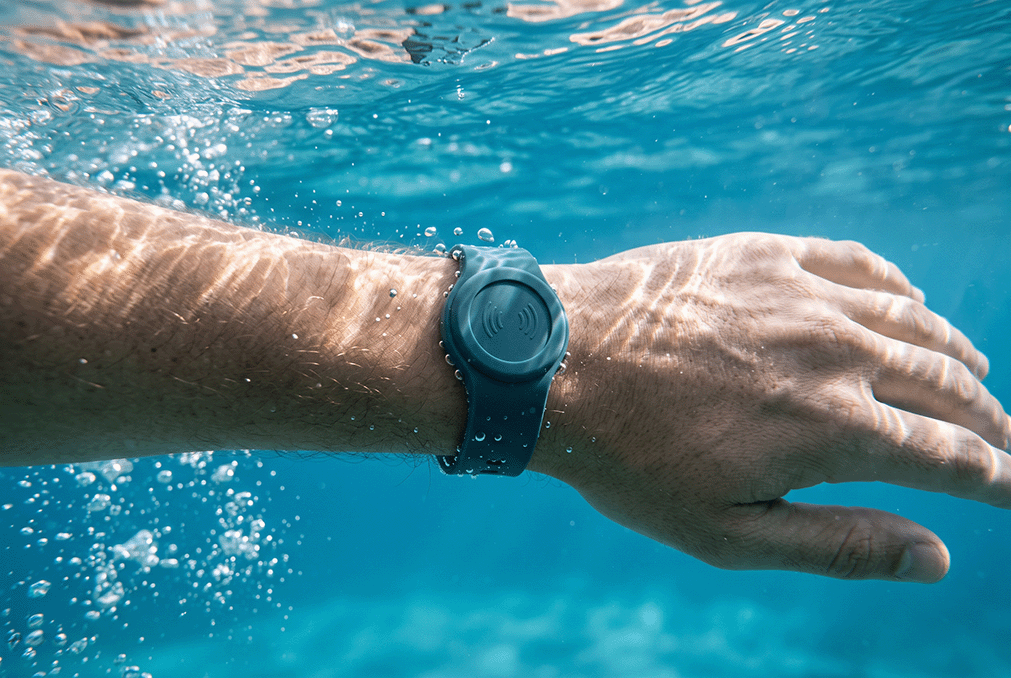
Material is central to waterproofing, and silicone is the material of choice. Silicone is naturally waterproof, flexible, and durable, and it can be molded to fully encase the chip in a seamless, impermeable body — ideal for waterproof bands. Its waterproof nature means the material itself does not absorb or admit water, and its moldability allows the complete sealing that waterproofing requires. Silicone also withstands the chlorine, salt, and repeated wetting of pools and beaches without degrading. These properties make silicone the standard material for fully waterproof RFID wristbands. Other materials may resist water to a degree but generally cannot match silicone's complete waterproofing and durability in submersion. When a band must be truly waterproof for swimming and constant water exposure, silicone is typically the right material. The choice of silicone is a key indicator of a genuinely waterproof band, as the material's inherent properties enable the complete, durable sealing that makes wristbands reliably waterproof in wet environments.
Closures and water exposure
Closures are a consideration in waterproof bands, though the main waterproofing is in the sealed chip body. The closure mechanism should not compromise the band's function in water — silicone bands typically use closures that work reliably when wet. Because the chip is sealed within the band body rather than near a closure opening, the closure does not usually affect waterproofing of the electronics. However, the closure should be secure enough to keep the band on during active water use, as a band lost in a pool is a band that cannot function. Choosing waterproof bands with secure closures suited to active, wet use ensures the band stays on and works. While the sealed-chip construction provides the waterproofing, a reliable closure ensures the band remains on the wrist through swimming and water activities. The combination of fully sealed electronics and a secure, water-appropriate closure ensures waterproof wristbands perform reliably in the water, staying on and functioning throughout active aquatic use at pools and water parks.
Water-resistant versus fully waterproof
An important distinction is between water-resistant and fully waterproof. Water-resistant bands can handle splashes, rain, and brief wetting but may not survive full, repeated submersion — water could eventually reach the chip. Fully waterproof bands are completely sealed to keep water out even under submersion, suited to swimming and constant water exposure. Many bands made of materials like vinyl or Tyvek are water-resistant, fine for getting wet but not for swimming, while properly sealed silicone bands are fully waterproof. The distinction matters: for water parks and pools where bands are submerged repeatedly, water-resistant is not enough — you need fully waterproof. Confirming which a band is prevents choosing a merely water-resistant band for a submersion application. Understanding that water-resistant and waterproof are different levels of protection ensures you select the right one for your water exposure, choosing fully waterproof silicone bands when submersion is involved rather than assuming any water-tolerant band suffices.
Ideal use cases for waterproof bands
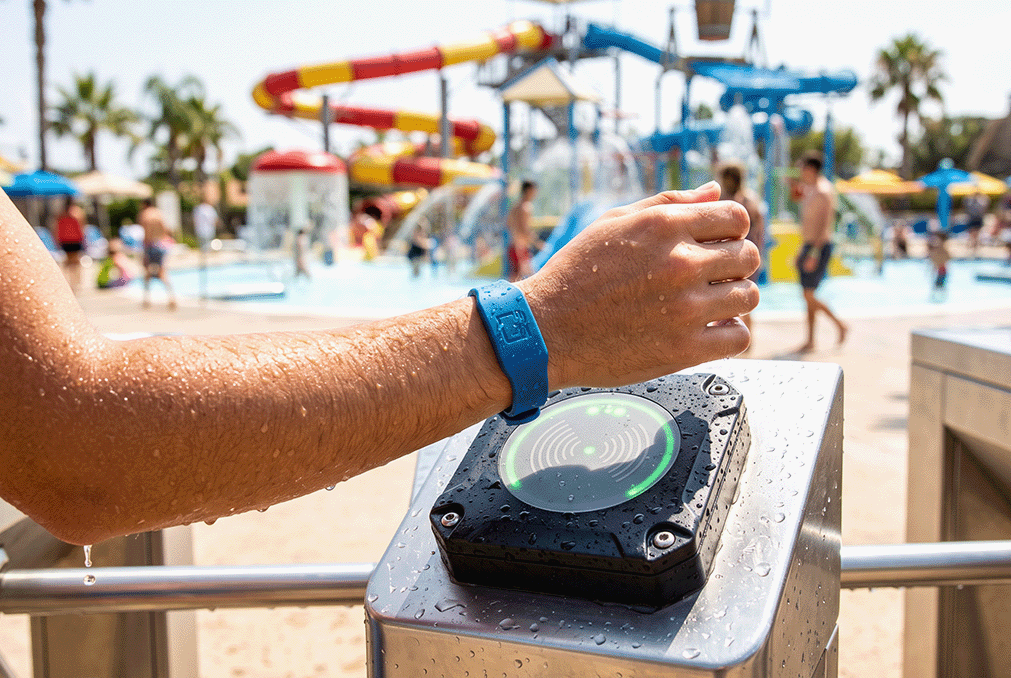
Waterproof bands are essential for water-intensive settings. Water parks need fully waterproof bands for access, lockers, and cashless payment as guests are constantly in water. Swimming pools and aquatic centers require waterproofing for member or guest bands. Beaches, water sports, and aquatic events benefit. Any setting where guests swim or are repeatedly submerged needs fully waterproof bands, not merely water-resistant ones. Spas and wet facilities also benefit. For these applications, the complete waterproofing of sealed silicone bands ensures reliable function despite constant water exposure. Choosing fully waterproof bands for water-intensive use prevents the read failures that water would cause in lesser bands. For venues and events centered on water, waterproof RFID wristbands are the necessary choice, providing the access, locker, and payment functionality guests need in an environment where the bands will inevitably be submerged repeatedly throughout each visit.
How to verify a band is truly waterproof
To verify waterproofing, take a few steps. Confirm with the manufacturer that the band is fully waterproof and rated for submersion, not just water-resistant — ask specifically about swimming and repeated submersion. Check the material and construction: fully sealed silicone is the indicator of genuine waterproofing. If possible, test a sample by submerging it and confirming the chip still reads reliably after. Ask about the band's performance in chlorinated or salt water if relevant. Clarifying the waterproof rating and construction before ordering ensures you get bands that truly withstand your water exposure. Do not assume a band is fully waterproof without confirming, as water-resistant bands may be marketed loosely. As a manufacturer of fully waterproof silicone RFID wristbands, our team can confirm waterproofing suited to swimming and submersion for your application. To get genuinely waterproof RFID wristbands for your water park, pool, or aquatic venue, contact our team with your requirements.
Frequently Asked Questions
What makes an RFID wristband waterproof?
Fully sealing the chip and antenna within a continuous, impermeable material with no gaps or seams water can penetrate. When the inlay is completely encased — typically in molded silicone — water cannot reach it, so the band keeps functioning even when submerged. This complete sealing, not mere splash resistance, is true waterproofing.
Why is silicone used for waterproof bands?
Silicone is naturally waterproof, flexible, and durable, and can be molded to fully encase the chip in a seamless, impermeable body. It withstands chlorine, salt, and repeated wetting without degrading. These properties make it the standard material for fully waterproof bands that keep working through swimming and constant water exposure.
Is water-resistant the same as waterproof?
No. Water-resistant bands handle splashes, rain, and brief wetting but may not survive full, repeated submersion — water could eventually reach the chip. Fully waterproof bands are sealed to keep water out even when submerged, suited to swimming. For water parks and pools, you need fully waterproof, not just water-resistant, bands.
What are waterproof bands used for?
Water parks, swimming pools, aquatic centers, beaches, water sports, and any setting where guests swim or are repeatedly submerged. They handle access, lockers, and cashless payment reliably despite constant water exposure. Spas and wet facilities also benefit. These applications require fully waterproof bands rather than merely water-resistant ones.
How can I verify a band is truly waterproof?
Confirm with the manufacturer that it is fully waterproof and rated for submersion, not just water-resistant, asking specifically about swimming. Check that it uses fully sealed silicone construction. If possible, test a sample by submerging it and confirming the chip still reads. Clarify performance in chlorinated or salt water if relevant before ordering.
Get genuinely waterproof RFID wristbands for wet venues
We manufacture fully waterproof silicone RFID and NFC wristbands sealed for swimming and submersion — reliable access, lockers, and payment at water parks and pools.
Talk to our wristband team See silicone wristbands