


We will cover how readers work, fixed readers, handheld readers, mobile readers, antennas and range, and how to choose the right reader for your application.
Key takeaways
- Readers communicate with tags and come in fixed, handheld, and mobile types.
- Fixed readers automate capture at chokepoints like doors and conveyors.
- Handheld readers enable mobile scanning, counting, and locating tags.
- The right reader — or combination — depends on your use case and workflow.
How RFID readers work
Readers are the active devices in an RFID system that communicate with tags. A reader transmits radio energy through its antenna, which powers passive tags within range and prompts them to respond with their data, which the reader captures and passes to the connected system. The reader's power, antenna, and configuration determine its range and performance. Readers handle the radio communication that makes RFID work, turning the presence of tags into usable data. Different readers are designed for different purposes, with varying form factors, power, and antenna arrangements suited to how and where they are used. Understanding that the reader is the device capturing tag data, and that its design affects performance, is the foundation for choosing the right type. The reader, working with its antenna, performs the essential function of reading the tags that carry the data your system relies on, making reader selection as important as tag selection in designing an RFID deployment that captures data reliably where you need it.
Fixed readers for automated capture
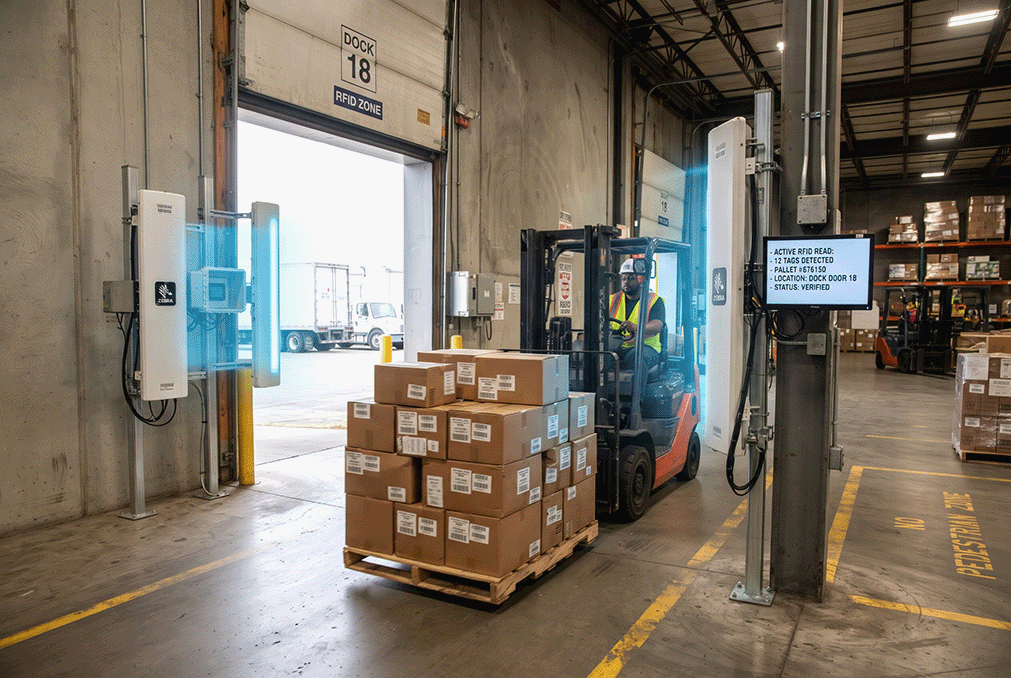
Fixed readers are installed at set locations to capture tags automatically as they pass. Mounted at doorways, conveyors, dock doors, or other chokepoints, a fixed reader with its antennas continuously reads tags passing through its field, capturing data without human involvement. This automation suits applications where items routinely pass a point — inventory moving through a warehouse, products on a conveyor, or items passing a portal — and need to be read automatically. Fixed readers enable hands-free, continuous capture at the points that matter, ideal for high-throughput or routine reading. For applications needing automated reading at specific locations, fixed readers provide the infrastructure to capture tags as they pass, without staff scanning each one. The automated, continuous capture fixed readers provide at chokepoints is fundamental to many RFID deployments, especially in warehousing and supply chain, where reading tags automatically as goods move through key points enables the visibility and efficiency that make RFID valuable at scale.
Handheld readers for mobile scanning
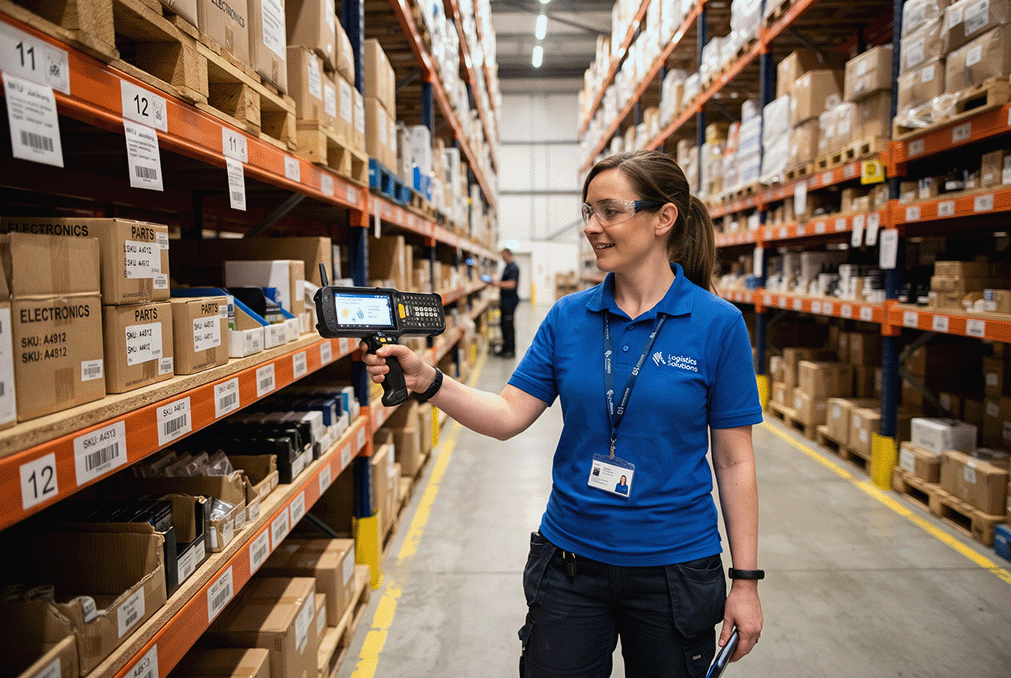
Handheld readers are portable devices carried by staff to read tags wherever needed. A handheld reader lets a person scan tags actively — counting inventory on shelves, reading items in storage, searching for specific tagged items, or capturing data away from fixed points. This mobility suits applications where reading happens in varied locations rather than at set chokepoints, such as taking inventory throughout a store or warehouse, locating items, or verifying stock. Handheld readers put reading capability in the operator's hand, enabling flexible, mobile data capture. Many handheld readers also support locating a specific tag by signal strength, helping find a particular item among many. For applications requiring mobile reading, counting, or searching, handheld readers provide the flexibility to read tags anywhere. The portable, operator-directed reading handheld devices enable complements fixed readers, supporting the mobile scanning, inventory counting, and item-locating tasks that many RFID applications require throughout a facility rather than only at fixed points.
Mobile readers and smartphones
Mobile readers based on smartphones bring RFID and NFC reading to widely available devices. For NFC, smartphones have built-in reading capability, letting any compatible phone read NFC tags with a tap — the basis for consumer engagement and many NFC applications. For UHF RFID, smartphone-connected readers or attachments add reading capability to a mobile device, combining the phone's interface and connectivity with RFID reading. This approach leverages familiar, connected devices, suiting applications where smartphone-based reading is convenient, such as field operations, consumer interactions, or deployments wanting to use mobile devices. Mobile reading via smartphones makes RFID and NFC accessible on devices people already use, supporting flexible, connected applications. For NFC consumer engagement and for RFID applications suited to smartphone-based reading, mobile readers extend reading to the ubiquitous smartphone. The accessibility and connectivity of smartphone-based reading, especially for NFC, opens applications that leverage the devices everyone carries, complementing dedicated fixed and handheld readers with the convenience of mobile, connected reading on familiar hardware.
Antennas and read range
Antennas are crucial to reader performance, determining the read field and range. The antenna transmits the reader's energy and receives tag responses, and its type, placement, and configuration shape the reading area and distance. Fixed readers often use external antennas positioned to create the desired read field at a chokepoint, while handheld and mobile readers have integrated antennas suited to their form. Read range depends on the reader power, antenna, tag, frequency, and environment, with UHF systems generally offering longer range than HF or NFC. Proper antenna selection and placement are essential to capturing tags reliably where intended while avoiding reading tags outside the intended area. Understanding that antennas shape the read field, and that range depends on multiple factors, is important to designing reading infrastructure that works. The antenna configuration, matched to the application, determines whether the reader captures the tags it should — making antennas and read range key considerations in deploying readers that reliably capture the tags your application requires.
Matching readers to your application
The right reader depends on your application and workflow. Fixed readers suit automated capture at set points — chokepoints where items routinely pass and need hands-free reading. Handheld readers suit mobile reading, counting, searching, and tasks across varied locations. Mobile smartphone-based readers suit NFC engagement and applications leveraging mobile devices. Many deployments use a combination — fixed readers for automated capture at key points, handheld readers for mobile inventory and searching — matching reader types to the different reading needs across the operation. Identifying where and how you need to read tags points to the appropriate readers. Understanding the strengths of each type lets you select readers, or a combination, that capture the data you need throughout your workflow. Matching reader technology to your application — automated, mobile, or smartphone-based — ensures your system reads tags effectively where and how your operation requires, making thoughtful reader selection, alongside the right tags, essential to a well-designed RFID deployment. To discuss the tags that work with your chosen readers, contact our team.
Frequently Asked Questions
What are the main types of RFID readers?
Three main types: fixed readers installed at set locations for automated capture, handheld readers carried by staff for mobile scanning and searching, and mobile readers based on smartphones (built-in for NFC, attachments for UHF RFID). Each suits different reading needs across an operation.
When should I use a fixed RFID reader?
Fixed readers suit applications where items routinely pass a point and need automatic, hands-free reading — doorways, conveyors, and dock doors. They capture tags continuously as items pass, ideal for high-throughput or routine reading in warehousing and supply-chain settings without staff scanning each item.
What are handheld RFID readers used for?
Handheld readers enable mobile, operator-directed reading: counting inventory on shelves, reading items in storage, searching for specific tagged items, and capturing data away from fixed points. Many also locate a specific tag by signal strength, helping find a particular item among many throughout a facility.
Can a smartphone read RFID tags?
Smartphones have built-in NFC reading, letting compatible phones read NFC tags with a tap. For UHF RFID, smartphone-connected readers or attachments add reading capability. This makes RFID and NFC accessible on familiar, connected devices, suiting consumer engagement and field applications using mobile devices.
What determines RFID read range?
Read range depends on the reader power, antenna type and placement, the tag, the frequency, and the environment. UHF systems generally offer longer range than HF or NFC. Proper antenna selection and placement are essential to capturing tags reliably where intended while avoiding reading tags outside the intended area.
Match the right tags to your reader setup
Whatever readers your deployment uses — fixed, handheld, or mobile — we help you select and produce tags that read reliably with them across your application and environment.
Discuss your system Explore RFID tags